When Is a Nose Reshaping Procedure the Right Choice?
- Rita Sharma
- Jan 21
- 3 min read

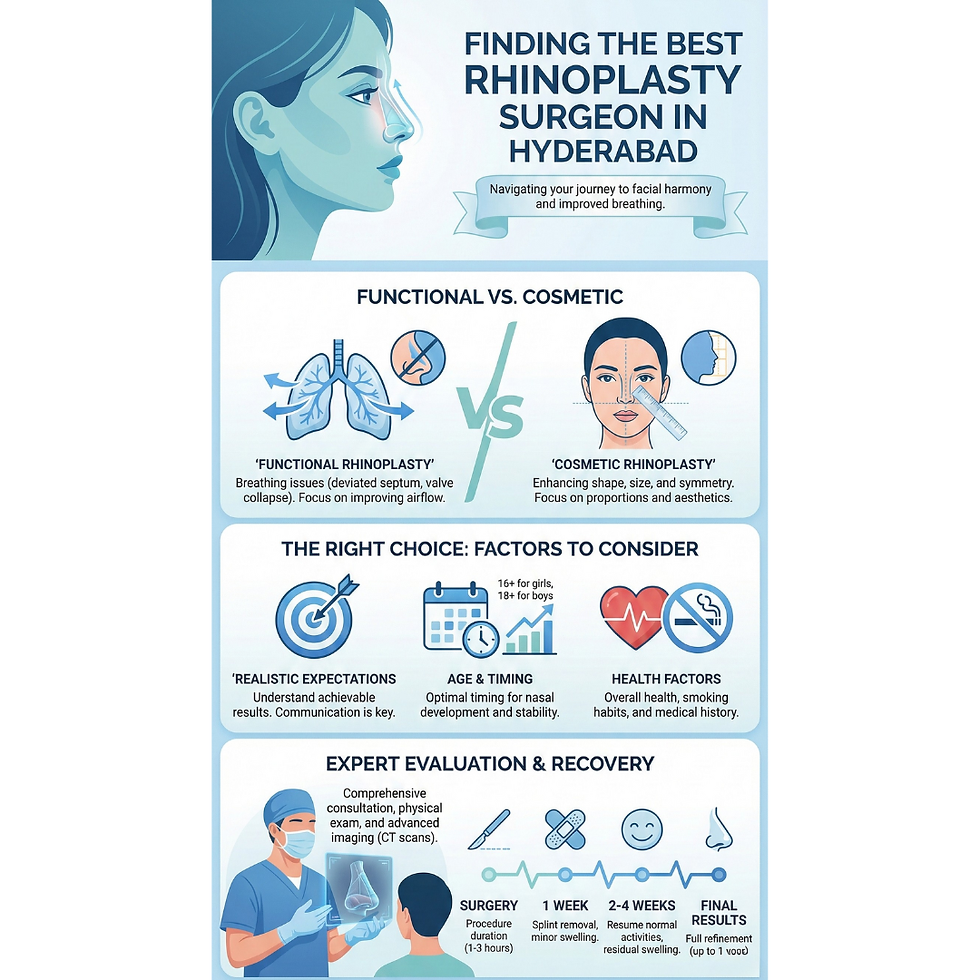
A nose reshaping procedure, or rhinoplasty, is appropriate when the structure or appearance of the nose affects a person’s facial balance, breathing, or self-confidence. It is not a cosmetic choice for everyone. For some, it addresses functional concerns like difficulty breathing due to a deviated septum. For others, it corrects proportions that make the face appear asymmetrical.
The decision should be guided by personal needs, realistic expectations, and expert evaluation from a qualified professional, such as the best rhinoplasty surgeon in hyderabad.
Understanding Functional vs Cosmetic Needs
Rhinoplasty serves two primary purposes: functional and cosmetic. Functional issues include:
• Difficulty breathing due to structural problems • Chronic sinus issues related to nasal shape • Trauma that has altered nasal passages
Cosmetic needs are more subjective and involve correcting:
• Nose size or shape disproportionate to facial features • Prominent humps or bumps • Bulbous or wide nasal tips
Identifying whether the concern is functional, cosmetic, or both helps determine the right surgical approach and expected outcome.
Realistic Expectations Are Critical
A successful procedure depends on aligning expectations with achievable results. Rhinoplasty can improve symmetry and proportion but cannot create perfection. Patients should discuss goals openly with the surgeon, including any concerns about appearance or breathing.
The best rhinoplasty surgeon in hyderabad will assess bone structure, cartilage, and skin type to provide a realistic preview of outcomes. This reduces dissatisfaction and ensures the procedure addresses the right concerns.
Age and Timing Considerations
Rhinoplasty is generally recommended once facial growth is complete, usually after the late teens. Younger patients may require evaluation for growth patterns, while older adults may need consideration of skin elasticity and healing capacity.
Timing matters because optimal results depend on both physical maturity and overall health. Patients should be in good general health to reduce surgical risks and support recovery.
Certain conditions and habits can influence suitability for a nose reshaping procedure. Key factors include:
• Overall medical history, including allergies or respiratory conditions
• Non-smoker status or willingness to quit before surgery.
• Commitment to post-surgery care and follow-up
These factors affect both safety and the longevity of results.
The Importance of Expert Evaluation
A nose reshaping procedure requires precision. A skilled surgeon evaluates the nasal structure in three dimensions, considering how changes will interact with the entire face.
During consultation, the surgeon may:
• Examine cartilage, bone, and skin thickness • Discuss previous injuries or surgeries • Offer imaging or mock-up previews of expected outcomes
Local expertise matters. Choosing the best rhinoplasty surgeon in hyderabad ensures access to practitioners experienced with both aesthetic and functional considerations in the regional population.
Recovery and Long Term Considerations
Recovery from rhinoplasty varies by individual and procedure complexity. Patients typically experience swelling, bruising, and mild discomfort for several weeks. Long-term results may take up to a year to fully manifest.
Understanding recovery time is essential for planning work, social engagements, and follow-up appointments. Proper adherence to post-operative care also helps protect the investment in the procedure and reduces complications.
Making the Decision
The right choice for a nose reshaping procedure combines personal motivation, realistic expectations, medical suitability, and professional guidance. Patients who consider all these factors are more likely to be satisfied with both appearance and function.
Seeking a consultation with the best rhinoplasty surgeon in hyderabad provides clarity on whether surgery is appropriate, the likely outcome, and the safest approach.
Conclusion
A nose reshaping procedure is appropriate when structural, functional, or proportional concerns affect daily life or self-confidence. Careful evaluation, realistic goal setting, and professional guidance are essential. Patients should prioritize surgeons with experience and local expertise to achieve balanced, long-lasting results.
FAQs
Q.1 How do I know if I need a functional or cosmetic rhinoplasty
Ans: Functional rhinoplasty addresses breathing or structural issues, while cosmetic focuses on appearance. A consultation with a qualified surgeon can determine which applies.
Q.2 Is rhinoplasty safe for everyone
Ans: Most healthy adults are suitable, but medical conditions, smoking, or unrealistic expectations may require adjustments or delay surgery.
Q.3 How long is the recovery period
Ans: Initial swelling and bruising last a few weeks, but final results may take up to a year.
Q.4 Can rhinoplasty fix previous injuries
Ans: Yes. Many procedures correct trauma-related deformities, but the surgeon will assess the extent of repair needed.
Q.5 How do I choose the right surgeon
Ans: Look for experience, patient reviews, before-and-after portfolios, and expertise in both functional and cosmetic rhinoplasty.


Comments